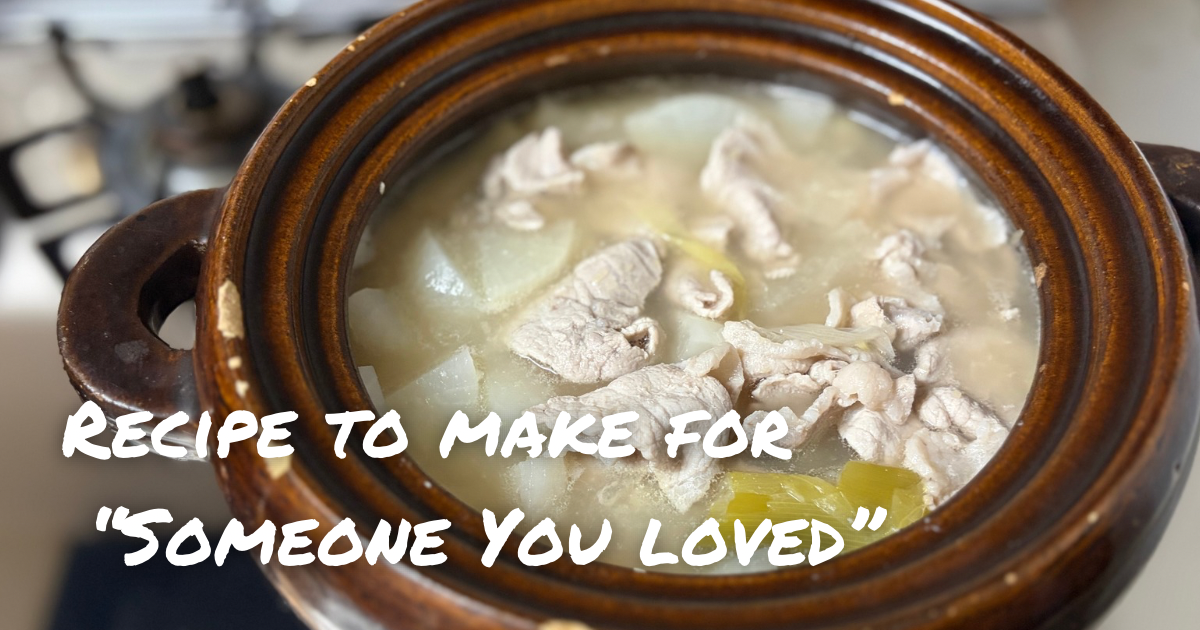
今回は豚ロース薄切り肉を使ってやわらかく・脂っこくなりすぎない塩煮込みを作ります。薄切り肉は長く煮るとかたくなりやすいので、大根を先に煮て、お肉は最後に短時間だけ火を入れるのがポイント。
このスープにご飯を入れて雑炊にしても美味しいの。
材料 3人分
- 豚ロースしゃぶしゃぶ用 … 280〜300g
- 大根 … 500g
- 長ねぎ … 1/2本
- しょうが … 1かけ (チューブの生姜でもOK。その場合は1ギュッと入れる)
- 水 … 600ml
- 酒 … 大さじ2
- 砂糖 … 小さじ1
- 鶏ガラスープの素 … 小さじ1と1/2
- 塩 … 小さじ1/2から
- しょうゆ … 小さじ1/2
- ごま油 … 小さじ1/4
TIPS
高齢家族には、水溶き片栗粉を加えてとろみをつけると食べやすいかも
- 片栗粉 … 小さじ1
- 水 … 小さじ2(片栗粉用)
作り方
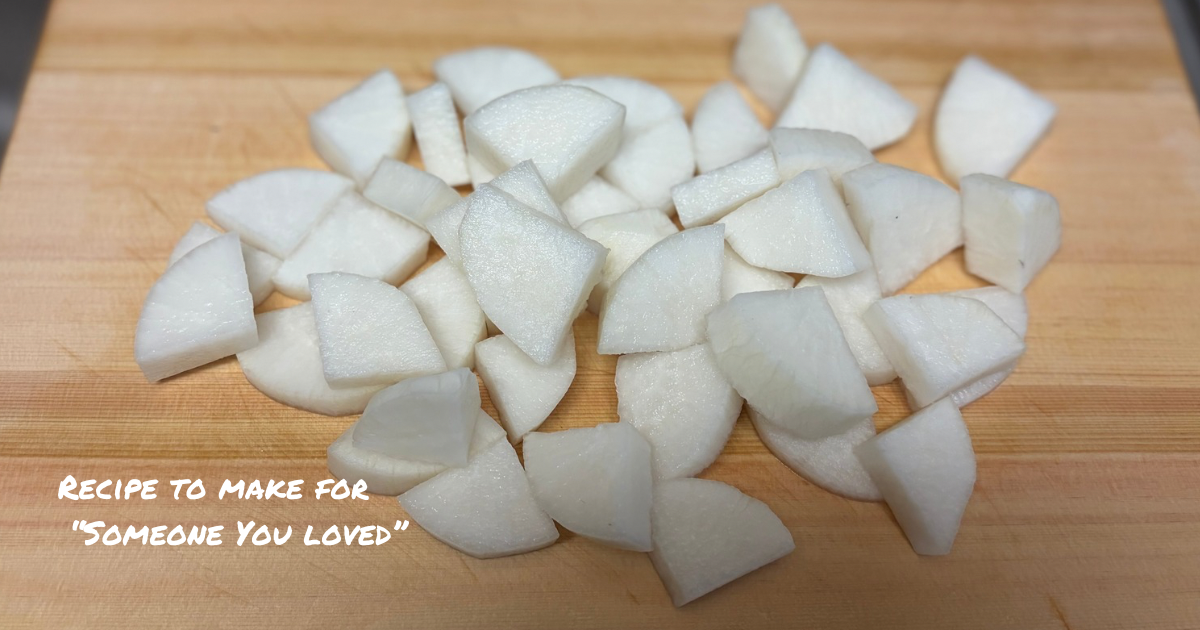
1. 大根は皮を少し厚めにむき、2〜2.5cm厚さのいちょう切り
2. 鍋に大根、水600ml、酒、しょうが、鶏ガラスープの素、砂糖を入れて火にかける。煮立ったら弱めの中火にして蓋をし、25〜30分煮る。竹串が抵抗なく入るくらいまで、しっかりやわらかく煮てね。
3. 長ねぎは1cm幅程度の斜め切りにして、大根の鍋へ加え、5分ほど煮ます。
4. 豚ロースは4〜5cm幅に切る。
5. 火を弱め、豚肉を1枚ずつ広げて加えます。グラグラ沸騰させず、2〜3分程度、肉の色が完全に変わるまで加熱します。しゃぶしゃぶ用肉は長時間煮ると肉汁が抜けてかたくなりやすいので、この工程が大事。
6. 塩小さじ1/2、しょうゆ小さじ1/2を加えます。味を見て、薄ければ塩を少量ずつ追加します。
Option
とろみをつける場合は、ここで水溶き片栗粉を少しずつ加える。
7. 最後にごま油小さじ1/4を加えて完成です。
Translation
This time, I’m making a light and comforting pork and daikon stew using thinly sliced pork loin. The trick is to keep the pork tender without making the dish too rich or greasy.
Thinly sliced pork can get tough if you simmer it for too long, so I cook the daikon first until it’s nice and tender, then add the pork right at the end and cook it only briefly. That little step makes a big difference!
And don’t throw away that delicious broth—add some cooked rice to it and turn it into a simple rice soup. So good!
Ingredients Serve 3
- 280–300g thinly sliced pork loin (shabu-shabu style)
- 500g daikon radish
- 1/2 Japanese long green onion (naganegi)
- 1 small piece fresh ginger
Ginger paste from a tube works too—just add a good squeeze. - 600ml water
- 2 tbsp sake
- 1 tsp sugar
- 1 1/2 tsp chicken bouillon powder
- 1/2 tsp salt, plus more to taste
- 1/2 tsp soy sauce
- 1/4 tsp sesame oil
Tip for Older Family Members
If you’re making this for an older family member, slightly thickening the broth with potato starch may make it easier to eat.
- 1 tsp potato starch
- 2 tsp water
Mix these together before adding to the soup.
Instructions
1. Prep the daikon.
Peel the daikon a little more thickly than usual, then cut it into quarter-round slices about 2–2.5cm (about 1 inch) thick.
2. Simmer the daikon.
Add the daikon, 600ml water, sake, ginger, chicken bouillon powder, and sugar to a pot and bring to a boil.
Once boiling, reduce the heat to medium-low, cover, and simmer for 25–30 minutes. Cook until the daikon is really tender—a bamboo skewer or fork should slide in easily with almost no resistance.
3. Add the green onion.
Slice the green onion diagonally into pieces about 1cm (a little under 1/2 inch) wide. Add it to the pot and simmer for another 5 minutes.
4. Prep the pork.
Cut the pork into pieces about 4–5cm (1 1/2–2 inches) wide.
5. Gently cook the pork.
Turn the heat down and add the pork one slice at a time, spreading each piece out as you add it.
Don’t let the broth come to a vigorous boil. Gently cook the pork for about 2–3 minutes, or until it is completely cooked through and no longer pink.
This step is important! Shabu-shabu pork is very thin, so cooking it for too long can make it dry and tough.
6. Season the broth.
Add 1/2 teaspoon salt and 1/2 teaspoon soy sauce. Taste the broth and, if needed, add a little more salt at a time until it tastes just right.
Optional: Make the broth thicker.
If you’d like a slightly thicker broth, slowly stir in the potato starch mixture at this point.
7. Finish with sesame oil.
Add 1/4 teaspoon sesame oil at the very end, and it’s ready to serve.
The result is tender pork, soft and juicy daikon, and a light, savory broth that’s comforting without feeling heavy.
And again, save that broth! Add some cooked rice and gently simmer it for an easy Japanese-style rice soup the next day. It might just be my favorite part.